Showing posts with label Summer. Show all posts

Monday, 15 October 2012

When the Weeds in Your Life Keep Growing

Most of us hate weeds. They take over our yards and our gardens and make life generally miserable. But what about the weeds in our lives? Can they serve a greater purpose?

Don’t touch those weeds! Here’s a story I wrote several years ago that illustrates what I’m talking about:


Saved by the Weeds

When the Weeds in Your Life Keep Growing
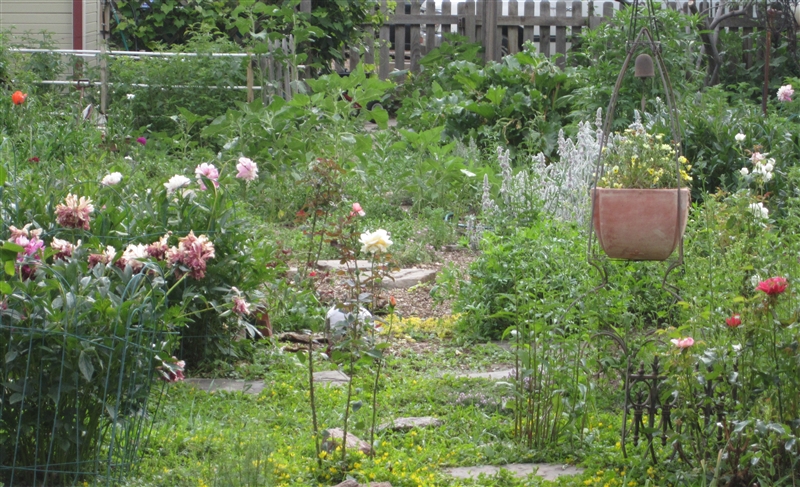
Photo by Rebecca Barlow Jordan


Farming, like other high-risk occupations, requires a great deal of faith, dependence, and trust in God’s timing and goodness.

Tuesday, 8 May 2012

Climate Change Could Be Tough on Seniors' Health: Study

Wide temperature swings in summer could lead to 10,000 excess deaths in U.S. per year
By Mary Elizabeth Dallas
HealthDay news image

MONDAY, April 9 (HealthDay News) -- Even small swings in temperatures could put elderly people with chronic illnesses such as diabetes, heart failure and lung disease at greater risk of death throughout the coming summer, a new study indicates.

Researchers from the Harvard School of Public Health in Boston found temperature fluctuations related to climate change could claim thousands of lives every year.

Experts predict climate change could increase variations in summer temperatures, particularly in the mid-Atlantic states and in parts of France, Spain and Italy. In these more volatile regions, this could pose a serious public health risk, the study authors claimed.

Monday, 7 May 2012

What is relative humidity and how does it affect how I feel outside?


If the air is at 100-percent relative humidity, sweat will not evaporate into the air. As a result, we feel much hotter than the actual temperature when the relative humidity is high.
Karl Weatherly/Getty Images

Humidity is somethi­ng we hear about daily in weather reports. Humidity is to blame for that muggy, steam-room feeling you experience on certain summer days.

Humidity can be measured in several ways, but relative humidity is the most common. In order to understand relative humidity, it is helpful to first understand absolute humidity.

Thursday, 5 April 2012

COPD Blog: COPD During the Dog Days of Summer


Robert T. Schreiber, MD, an American Lung Association in New York expert


It’s hot, hazy, and humid here in the United States. The “dog days of summer” produce poor air quality with high humidity and air pollution that makes it hard to breathe, particularly for people with COPD. Air pollution can irritate the bronchial tubes and alveoli (air sacks in the lungs) in people with and without lung diseases. For people with COPD, the resulting bronchospasm can lead to a “breathing attack” requiring further treatment, such as increased bronchodilator therapy and corticosteroids. If not managed properly, emergency room treatment and hospitalization can result. So what can you do to get through these hot and humid days?

1: Be aware. You can follow the air quality index on your iPhone with the Everyday Health COPD Tracker, or by watching your local weather forecast, reading the newspaper, or going to a Web site such as www.stateoftheair.org by the American Lung Association. Based on the air quality where you live, you can take actions to protect yourself.

2. Stay indoors. If the air pollution levels are high, try to stay indoors and avoid breathing the noxious gases out there. You can limit the time you spend outside by only doing things that “have to be done” on bad air quality days. Put off errands and visits that can wait. Shop for food and go to doctor’s appointments early in the day (best choice) or late in the day (second choice) when it’s not as hot. Air pollution levels usually are lowest in the mornings, so if you have to go out, get up early.

3. Run your air conditioner. Some people don’t like to use air conditioners since it makes them feel cold, or they might be trying to keep down the electric bill. But air conditioners aren’t just for lowering the temperature; they remove humidity and filter the air, keeping the air clean. They can be kept on a low setting (preferably with an energy saving model), and the living area doesn’t have to be cold — the air conditioner should be used to keep the home free of hot, humid, polluted air.

4. Change your exercise routine. Exercising increases your respiratory rate and depth of breath, increasing your minute ventilation, or the amount of air you breathe in a minute. This means your lungs are exposed to more air, and if it’s polluted, you’re more likely to have a difficult time breathing. Medical studies have shown that people who exercise in air pollution have a drop in lung function. So, keep your workouts indoors (at a gym or with home equipment) in air conditioning, and if you want to exercise outside, go early in the morning when the air quality is usually best.

5. Drink fluids. Many people don’t realize that your body loses a lot of fluid to stay cool in the heat, even when you don’t feel sweaty. This is especially true for older people, who may be even less aware of becoming dehydrated. You can also lose extra fluid while staying indoors in air conditioning. It’s a good idea to increase your liquid intake by at least an extra two glasses a day on very hot days, even if you’re inside.

It’s not easy getting through the hottest days of the year if you have COPD. Hopefully, these tips will make it easier for you to breathe well during the summertime, until the air quality improves and the temperature moderates.Dr. Schreiber is board certified in internal medicine and pulmonary diseases by the American Board of Internal Medicine. He is a member of Nassau Chest Physicians, P.C., who are actively involved with the American Lung Association in New York. Schreiber is director of the SICU at St. Francis Hospital, medical director of the Oyster Bay Cove Village Police Department, and a member of the Nassau County Medical Reserve Corps. He is on the professional staffs of St. Francis Hospital, North Shore University Hospital (Manhasset and Plainview), and St. Joseph Hospital.

Friday, 16 March 2012

Why Suicide Rates Increase in the Spring


We often hear that suicide rates are highest during the holidays. I even heard a character in a Christmas TV movie warn about the risk during the last holiday season. Seems to make sense, in a way. After all, the holiday season even has its own syndrome - the holiday blues. Many people are stressed out, and for anyone who's alone and depressed, the contrast between the ideal of the holidays and reality can be hard to take.

Here's the problem - the prevailing wisdom is wrong. In fact, we're not heading away from the most dangerous time of the year for suicide, we're heading towards it. Suicide rates are actually at their highest during late spring and early summer, and at their lowest around the holidays. There does appear to be a jump on New Year's Eve and New Year's Day, which is thought to be due to the holiday season ending and harsh reality settling in.

So why, despite all the stress (even Jimmy Stewart tried to throw himself off of a bridge), does the holiday season seem to damp down suicide attempts? First, the increased socializing and contact with that many people do during the holidays may actually keep those suicidal thoughts at bay. The support of family and friends is one thing that keeps people from utter despair. Second, there are plenty of distractions. You're busy, busy, busy. This may be a source of stress, but it also can keep your mind from focusing on your depression. Also, even if someone's depressed, the beauty and joy of the holiday season can provide a temporary lift.

But why the heck does one of the most wonderful times of the year spur people to take their lives? Part of the reason is definitely that the contrast between a depressed person's inner world and the outer world is just too painful. In winter, the whole world, including nature, seems to match your dark mood.

Also, you begin to realize that if you don't feel good during this season, when the world is renewing itself, you're never going to. One of my lowest points, right at the time that I decided to try antidepressants, was in May. I remember sitting on the floor of my room on a lovely warm day. Spring had always been my favorite season, and I had the summer to look forward to, with weekends lying on the beach, one of my favorite things. But I felt like I could barely get through the next day. I had assumed that the winter had something to do with my depression, but when spring didn't cause my mood to lift, I knew it was time to get help.

In addition, there's a paradoxical response to the increase in sunshine that is thought to contribute to suicides in the spring. The sunshine can actually give people who have been feeling fatigued by the lack of sunlight during the winter enough energy to plan and carry out a suicide, yet not enough to give them an emotional lift. This is similar to the risk that can occur when someone starts on an antidepressant. In the beginning, the antidepressant may work enough to lift the fog that's been preventing them from accomplishing anything (like suicide) but not good enough (yet) to have hope.

For information on suicide prevention, please see the links below. I'll be writing a SharePost shortly about what to do if you think someone you know is depressed.
Samaritans 
Know Suicide's Warning Signs