Showing posts with label Spices. Show all posts

Thursday, 21 March 2013

Did Jesus Fulfill His Prophecy of How Long He Would Be Entombed?

article by Scott Ashley

Jesus Christ plainly said He would be entombed for three days and three nights. Can this be reconciled with a "Good Friday" crucifixion and burial and an "Easter Sunday" resurrection, which allows for barely a day and a half in the tomb? Or do the Gospels spell out a solution that fits perfectly with what Jesus foretold?

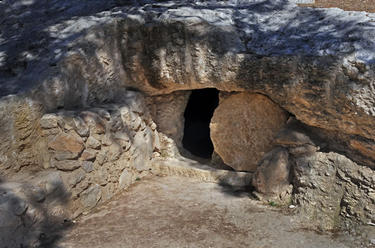
Rolling stone tomb
Jesus Christ's body was likely placed in a rolling-stone tomb similar to this one located in Galilee.

Source: Scott Ashley
In Matthew 12:38, some of the scribes and Pharisees asked Jesus for a sign to prove He was the Messiah. "Teacher, we want to see a miraculous sign from you," they told Him (New International Version).

Jesus responded that the only sign He would give was that of the prophet Jonah: "For as Jonah was three days and three nights in the belly of a huge fish, so the Son of Man will be three days and three nights in the heart of the earth" (Matthew 12:40, NIV).

Monday, 2 April 2012

Surprising Healing Benefits of Spices

By Brynn Mannino, Woman’s Day


Chances are you sprinkle cinnamon into your morning oatmeal or add a dash of oregano to pizza without giving the spices much thought. But did you know your favorite flavors can actually do your body good? According to Christina Suarez, master herbalist and owner of TheGoodHerbCo.com, while spices are only effective when eaten at least daily, each has its own specific health benefits. Read on to find out which additives can burn fat, ease a sore throat or help you get to sleep, and how you can incorporate them into your daily diet.


Cardamom

Fruit of the Elettaria cardamomum plant in the ginger family.

Health Powers: Eases belching, flatulence and indigestion; treats respiratory conditions like coughing, asthma and loss of voice; aids in the elimination of toxins through your skin.

Daily Dose: Stir a few freshly ground pinches of cardamom pods into a shot of OJ or your morning fruit salad, or mix it with white or brown rice before you boil it.


Cayenne

Fruit of the Capsicum annuum plant in the Solanaceae family, along with chile pepper.

Health Powers: Eliminates gas from the stomach and intestines; soothes sore throat, cold and flu symptoms; increases metabolism for weight control.

Daily Dose: Stir into a cup of hot chocolate or any sweet juice drink for a contrasting flavor kick.Cayenne

Fruit of the Capsicum annuum plant in the Solanaceae family, along with chile pepper.

Photo by Shutterstock.

Cinnamon
Bark of a small evergreen tree.

Health Powers: Tames nausea and stomach ulcers; functions as a mild anti-inflammatory; increases insulin sensitivity to help focus fat burn.

Daily Dose: Stir into coffee/tea, yogurt, oatmeal or any boxed cereal.
Photo by Shutterstock.

Cloves

Flower bud found at the base of an evergreen tree.

Health Powers: Soothes digestive tract muscles and is a potent antihistamine.

Daily Dose: Mix into your nightly ice cream treat or sneak into mustard spread.
Photo by Shutterstock.


Nutmeg

Fruit of Myristica fragrans,an evergreen tree.

Health Powers: Improves digestion; eases the symptoms of menstruation; induces calm and sleep.

Daily Dose: Grate a small amount into applesauce or plain yogurt. (Note: It’s safe to grate the entire nut, which you can usually buy whole at the supermarket, but you never want to consume more than one nutmeg per day because too much of this potent spice can cause stomach pain, double vision and other uncomfortable reactions.)
Photo by Shutterstock.

Celery Seed

Seed of the Apium graveolens plant in the parsley family.

Health Powers: Flushes the liver of toxins; lowers blood pressure; combats water retention.

Daily Dose: Think salads—tuna, potato and egg all work—which can be tossed onto a bed of lettuce, eaten alone or spread onto bread.
Photo by iStockphoto.

CorianderCoriander

Also known as cilantro; the leaves and seeds of the Coriandrum plant in the aromatic Apiaceae family.

Health Powers: Acts as a diuretic; eases seasonal allergies.

Daily Dose: Cook into couscous and quinoa, which you can store and eat with leftovers.
Photo by Shutterstock.

FennelFennel

Seed of the Foeniculum plant in the aromatic Apiaceae family.

Health Powers: Calms bowel distress; supports milk production in nursing mothers; combats water retention.


Daily Dose: Add to canned minestrones and vegetable soups.
Photo by iStockphoto

OreganoOregano

Leaf of the Origanum plant in the mint family.

Health Powers: Loosens mucus; helps treat respiratory illnesses; and calms indigestion.

Daily Dose: Use in any tomato-based foods, like marinara sauces, pizza and soups.
Photo by Shutterstock.

ThymeThyme

Leaf of the Thymus plant in the mint family.

Health Powers: Relaxes the muscle tissue of the gastrointestinal tract; stimulates immune system.

Daily Dose: Toss into any meat-based dishes.
Photo by Shutterstock.


Turmeric

Root of the Circuma plant in the ginger family.

Health Powers: Reduces inflammation (joints, airways); detoxifies the liver.

Daily Dose: Mix in with oil-and-vinegar-based salad dressings.
Photo by Shutterstock.

Some Spices Cut Cancer Risk That Comes With Grilled Burgers

(HealthDay News) -- Researchers report that adding certain spices to your burgers before tossing them on the grill this summer will not only add to the flavor of the meat, but they can also cut the risk of cancer long associated with the cooking of beef.

Scientists at Kansas State University (KSU) found that three spices in particular -- fingerroot, rosemary and turmeric -- seem to direct the greatest amount of antioxidant activity towards preventing the formation of heterocyclic amines (HCAs). HCAs, they note, are the cancer-causing compounds that are produced when foods such as beef are barbecued, grilled, broiled or fried.

Specifically, the three spices appeared to cut back on HCA production by upwards of 40 percent, the team observed, thereby significantly reducing the HCA-associated risk for developing colorectal, stomach, lung, pancreatic, mammary and prostate cancers.

"Cooked beef tends to develop more HCAs than other kinds of cooked meats such as pork and chicken," KSU food chemistry professor J. Scott Smith noted in a news release. "Cooked beef patties appear to be the cooked meat with the highest mutagenic activity and may be the most important source of HCAs in the human diet."

Therefore Smith and his colleagues looked into the HCA-inhibiting potential of six spices: cumin, coriander seeds, galangal, fingerroot, rosemary and turmeric.

Of all those investigated, rosemary came out on top as the strongest protector against HCA.

The authors suggested that consumers integrate these spices into their menus when appropriate, noting that some, such as rosemary, come in an extract form that has demonstrated HCA inhibition of 61 percent to 79 percent.

They pointed out that spicing allows for the sort of high-temperature cooking (above 352 degrees Farenheit) that is typically recommended for safe grilling, while at the same time blocking the increased HCA production that is known to occur when the flames intensify.

Smith and his team plan further research to see what other marinades and powders might do by way of HCA curtailment -- they noted that earlier work has shown that marinating steaks with particular herbs and spices effectively lowers HCA production.


More information
For more grilling safety tips, visit the U.S. Department of Agriculture.

9 Spices for Health, Energy and Longevity!

By Dr. Maoshing Ni

The colder weather is beckoning us back to our kitchens. Break out the spices to bring warmth, robust flavor, and a bounty of health benefits, including higher energy, increased immunity, and other life-enhancing surprises.

Considered to be dried seeds, fruit, roots or bark, spices have been valued for centuries by ancient cultures for their culinary and medicinal properties. For instance, a traditional Indian beauty trick was to spread turmeric paste on the skin to beautify it and prevent pimples. And Chinese doctors have used ginger since ancient times to cure aches and pains.

Here are some spices that you can start cooking with right away to elevate your longevity and health!


1. Garlic wards off heart disease

In addition to warding off Count Dracula, garlic, the spicy favorite in Italian fare, has been shown to improve cholesterol and lower blood pressure. According to the National Health and Medical Research Council, consuming half to one clove of garlic daily may reduce cholesterol by nearly ten percent. Your breath might suffer, but your heart will thank you. As an antibacterial, garlic is often used to treat minor infections.


2. Spotlight on cinnamon

Another ancient spice to recently come under scientific investigation is cinnamon. In the United States, cinnamon is usually thought of as the delicious spice in apple pie filling, but in other parts of the world, especially India and Asia, cinnamon has been used as a healing herb for centuries. Research is finally catching up to the wisdom of the East; many clinical studies have linked cinnamon consumption to lowered blood sugar. Both in vitro and human studies show improvement in insulin sensitivity with cinnamon polyphenols, as well as improvement in total and LDL cholesterol. Cinnamon is also thought to detoxify the system and stimulate brain function. Its antiseptic properties give it the ability to fight bladder infection, and if taken in the first 48 hours, a cup of strong cinnamon tea might just nip a bladder infection in the bud. Keep in mind that mixed study results make it difficult to prove these benefits on paper -- but it doesn't hurt to sprinkle a teaspoon into your next bowl of oatmeal.


3. Curry for joint health

Are your aching joints not jumping for joy in these autumn days? Try sprinkling some curry on your veggie omelet. Curry, a staple spice combo in Southeast Asian cuisine, contains turmeric, the yellow spice that gives curry its distinctive color. The active component in turmeric is called curcumin. If you are a fan of curry, you will be happy to know that this substance is associated with anti-inflammatory, antioxidant, anti-tumor, and anti-amyloid properties; amyloids are plaque-like proteins that build up in brain tissue, and are responsible for diseases like Alzheimer's and rheumatoid arthritis. In one randomized control study 107 patients with knee osteoarthritis received either 800 mg per day ibuprofen or 2 grams per day Curcuma domestica extract. Both groups showed improvement in pain on level walking and climbing stairs.

4. Star Anise aids digestion

As the name suggests, star anise is indeed star-shaped. Though it is not actually related to anise, star anise shares a similar licorice flavor, due to its content of anethole. Used to bring out flavor in slow-cooked meat dishes and long-simmered soups, this spice frequently makes an appearance in Indian cuisine and is an ingredient of the traditional five-spice powder of Chinese cooking. Star anise has been used in a tea to remedy rheumatism, and the seeds are sometimes chewed after meals to aid digestion.

Special combinations of spices and herbs can bring you a powerful immune zoom; one that includes star anise in the mix is the 5 Elements of Health, which promotes a strong immune function and balances the energies of your whole body.

5. Cardamom improves energy

Found in curries, rice dishes, herbal teas, and breads, cardamom is the spice that gives chai tea its main flavor. In Asia, cardamom has long been valued medicinally for its ability to increase circulation and improve energy. Considered an aphrodisiac in the Middle East, cardamom may also improve digestion, asthma, bronchitis, halitosis, and even help improve a bad mood.

6. Clove curbs cramping

A delicious addition to cooked fruit, roasts, sweet vegetable dishes, and teas, clove has been used since ancient times in India to improve digestive function. You may chew on some to alleviate toothaches, sore throats, diarrhea, and stomach cramps.

7. Cumin boosts immunity

An excellent addition to meat curries, stews, vegetables, seafood, and sauces, cumin is thought to boost the immune system and also to improve liver function, reduce flatulence, and aid in digestion.

8. Fennel Seed soothes your intestines

Often used to spice up recipes with meat, beans, or legumes, fennel helps digestion in two ways: It stimulates the production of gastric juices and also soothes the nervous system, regulating the action of the muscles that line the intestine.

9. Ginger: Remedies aches and nausea

A perfect compliment to vegetables, marinades, and sweets, ginger is also delicious in tea. Ginger may help relieve nausea, arthritis, headaches, menstrual cramps, and muscle soreness.

A word of warning: always discuss with your physician before treating conditions with spices to avoid any adverse interactions; for example, because garlic and ginger possess natural blood-thinning properties, individuals about to undergo surgery and those taking blood thinners should take extra precaution.

To maintain peak flavor, use spices within six months -- but the spice police won’t come knocking at your door if you keep them longer. They like to hang out in a cool, dark place in your pantry to preserve their oils and prevent loss of pungent flavors.

You can find many more tips about life-lengthening foods in Secrets of Longevity: Hundreds of Ways to Live to Be 100, now available on Kindle.

I hope you can use spices to make the most of your meals and your health! I invite you to visit often and share your own personal health and longevity tips with me.

May you live long, live strong, and live happy!

Thursday, 22 March 2012

Mary Magdalene: A Devoted Follower Of Jesus

 LESSONS FROM WOMEN OF THE BIBLE

By Philip Nunn 


We usually think of Jesus walking, teaching and healing while with His twelve apostles. Yet, as we look closer at the Gospels, we discover many women who loved Jesus and were interested in what He said and did. Some, like Martha and Mary, offered Him hospitality. Others, like the Samaritan woman, brought a crowd to Him. A grateful woman poured perfume on Him. Another washed His feet. His mother stood by Him. Others, like Joanna and Susanna, followed Jesus and the Twelve, and helped “support them out of their own means” (Lk. 8:3 NIV).


But of all these women, the life and character of Mary Magdalene shines brightest. Have you wondered why the resurrected Christ chose to show Himself to her first? (Mk.16:9). There’s something special about her. She shines bright compared with the attitudes and behavior of the apostles. She had much to teach them through her actions. She can also be a model for us today.

She was tormented by demons. 

Not much is said about her background. “Magdala” means “a tower.” Perhaps some called her Magdalene because of her strong character. But it’s more likely she came from the town of Magdala on the Sea of Galilee. While it was common then to identify a woman in relation to a relative, like “Joanna the wife of Chuza” (Lk. 8:3), Mary Magdalene is mentioned 12 times by name with no family connection. To some this suggests that she was unmarried. Yet there is something more telling about her past – a connection with demons.

We read that “some women who had been cured of evil spirits and diseases” followed Jesus. Among them was “Mary Magdalene from whom seven demons had come out” (Lk. 8:2). Sometimes evil spirits cause diseases. When the demon is gone, good health returns. If demons “come out,” how do they “come in”?

From what I’ve observed in Colombia where I’m a missionary, there’s usually some family history of witchcraft, drug abuse, incest, prostitution, etc., which allows a demon to possess a non-Christian. Those who’ve met someone possessed, understand the fear and helplessness of this Mary. It’s not uncommon for the possessed to consider suicide. It was in this condition that she met Jesus.

Demons don’t normally come out without a struggle. In the case of the demon-possessed man from the Gerasenes, the demons “begged Jesus again and again not to send them out” (Mk. 5:9-10). In Mary Magdalene’s case, Mark said she was one “out of whom Jesus had driven seven demons” (Mk. 16:9). An understanding of this background is key to understanding her passion to follow Jesus.

What’s your devotion to Jesus like? Could it be described as “passion”? Jesus contrasted the Pharisees to another sinful woman to make clear this spiritual reality: “He who has been forgiven little loves little” (Lk. 7:47). Since each of us has been forgiven much, like Mary Magdalene we should also love passionately. Yet we take our sin too lightly, and come to Christ with little urgency. We think we’re fairly good citizens needing just a little push to get to heaven. It’s impossible for Pharisees, and their modern equivalents, to love as this Mary did.

She followed and served Jesus. 

Once Jesus had made her completely free, she followed and served Him. Perhaps you’ve encountered enthusiastic Christians who love to serve. Maybe you are one. Mary Magdalene teaches us two important lessons. First, to serve Him as He wants, you must be free. Too many Christians try to serve while still bound to sad memories and bitterness associated with our sinful past. We get used to living under such a cloud. If so, stop serving and seek full freedom. Freedom in Christ is not academic doctrine; it’s a real experience available to every believer.

Second, to serve Him as He wants, we must follow Him. The fact that we are busy is not enough. We must be willing to serve the Lord with others. Most Christian service is carried out in teams: Our Lord Jesus formed an apostolic team. Paul traveled and served together with others. Mary Magdalene served Jesus with other women. Teams are usually made up of different personalities and this can easily become a problem. You’d be surprised at how many conflicts exist among missionaries who serve the same Master! Even the apostolic team had its conflicts (Mk. 9:34). Mary Magdalene did not distance herself from team service. She loved Jesus with passion, yet worked with “many others ... helping to support” Him and the apostles (Lk. 8:3).

Men (Lk. 8:1): The Twelve were specially chosen by Jesus. They were sometimes bossy and critical of others. Mary Magdalene must have noticed this, yet she did not compete with them. She was content in her role.
Rich Women (Lk. 8:3): Among those who served was “Joanna the wife of Chuza, the manager of Herod’s household.” The wealthy are not always easy to work with, yet there is no evidence that Mary entered into conflict with such.

Pushy Women (Mt. 27:55): Jesus called two brothers, James and John, the sons of Zebedee, to join the Twelve (Mk. 3:13-19). Their mother also followed Jesus. When the other apostles were distracted, she brought her sons to Jesus and said, “Grant that one of these two sons of mine may sit at your right and the other at your left in your kingdom.” This caused tension among the disciples (Mt. 20:21-24). Jesus called her sons the “Sons of Thunder” (Mk. 3:17). Did this name have to do with the temperament of their mother? Yet we find no conflict between Mary Magdalene and this woman. She shared Jesus with pushy women.

Relatives (Jn. 19:25): John records that Mary Magdalene was at the cross with Jesus’ mother and aunt (Jn. 19:25). They had family ties to Jesus; Mary Magdalene did not. Family connections can cause friction in teams, yet this Mary loved and served Jesus with no evidence of competition or jealousy. Can you work with those who think they’re closer to Jesus or more spiritual than you are?

She stood by the cross. 

Mary Magdalene is most remembered for being at the cross. Some might consider her standing there to be passive. But look closer. Together with the others, she had walked from Galilee to Jerusalem. Jesus was taken captive on Thursday; these women must have wondered all night what would happen next. Can you imagine their hurt as they heard the cries, “Crucify him”? On Friday they followed Him to Calvary. They saw Him nailed to the cross. They found no moral support from the Twelve; one had betrayed Him and another had denied Him.

Imagine how emotionally hurt Mary Magdalene was. But Matthew records more events to add to her pain: “Those who passed by hurled insults at Him” (Mt. 27:39). Yet Mary Magdalene was not ashamed of Jesus. Then three hours of “darkness came over all the land” (27:45). I once experienced a total solar eclipse. We lived for a few minutes in total darkness. I felt a strange coldness.

During those three hours, Mary Magdalene and the other women must have felt that darkness as “Jesus cried out again in a loud voice ... and gave up His spirit. At that moment ... the earth shook and the rocks split. The tombs broke open and the bodies of many holy people who had died were raised to life” (27:50-52). Imagine the panic – earthquakes, open tombs, risen dead! We are told that the soldiers “were terrified” (27:54). What kept Mary Magdalene by that cross? Why didn’t she flee with the others? I think her background made the difference. Unlike the Pharisees, being forgiven much, “she loved much” (Lk. 7:47).

How does our devotion to Christ respond to injustice? Do unanswered “Whys?” move us from Him? How do we respond to ridicule? Do we, like Peter, distance ourselves from Jesus? And what about times when the future seems uncertain? Do we remain close to our Lord? Sometimes the death of a loved one shakes us. Sometimes earthquakes (unemployment, divorce, division) shake our foundations. Sometimes there are resurrections of forgotten problems. Like Mary Magdalene, regardless of circumstances, let’s remain close to our Lord.

She watched Jesus’ burial. 

Jesus died on Friday afternoon. The Sabbath began at sunset, so there were only a few hours to prepare His body for the tomb. “As evening approached, there came a rich man from Arimathea, named Joseph ... Going to Pilate, he asked for Jesus’ body” (Mt. 27:57-58). John tells us that Joseph was “accompanied by Nicodemus ... The two of them wrapped it with the spices, in strips of linen” (Jn. 19:39-42). While they were doing this, “Mary Magdalene and the other Mary were sitting there opposite the tomb” (Mt. 27:61).

Would you have criticized Mary Magdalene if she had gone home after the crucifixion? But she stayed until the tomb was sealed. A devoted heart always goes beyond duty. Do you measure your service? Do you compare your devotion with that of others? A heart truly in love with Christ doesn’t make such comparisons!

She returned to the sepulcher. 

When a sinful woman poured expensive perfume on Jesus’ feet, some disciples got upset and asked, “Why this waste?” (Mt. 26:8). Wasn’t it also a waste when Mary Magdalene and the other women “went home and prepared spices and perfumes” (Lk. 23:55-56)? They knew Nicodemus and Joseph had already wrapped the body with “about seventy-five pounds of spices” (Jn. 19:39). Wasn’t that enough? A devoted heart doesn’t reason like that. It didn’t matter what others had done, they wanted to express their deep appreciation.

So many Christian songs have been composed. Why another one? So many Christian books and tracts have been written. Why another one? So many rich Christians give to the Lord’s work. Why bother with my small contribution? So many gifted evangelists present the gospel. Why should I? So many large organizations help the needy in this world. Why bother with one new family that moved next door? A loving heart doesn’t ask such questions. Like Mary, we also want to give Jesus something that smells good. “Do not forget to do good and to share with others, for with such sacrifices God is pleased” (Heb. 13:16). Such acts are also called “a fragrant offering ... pleasing to God” (Phil. 4:18).

“Very early on the first day of the week” Mary Magdalene and two other women “were on the way to the tomb” (Mk. 16:1-3). What made these three women get up so early? The angel at the tomb knew: “I know that you are looking for Jesus, who was crucified.” Then he surprised them with the good news: “He is not here; He has risen, just as He said” (Mt. 28:5-6).

She met the risen Christ. 

Mary Magdalene and the other women went to the sepulcher “looking for Jesus” (Mt. 28:5). Near the sepulcher they experienced another “violent earthquake” as the angel rolled back the stone (Mt. 28:2). You may have some difficulties along the way, but everyone who truly seeks Jesus eventually finds Him. “‘You will seek Me and find Me when you seek Me with all your heart. I will be found by you,’ declares the Lord” (Jer. 29:13-14). John records the moving encounter between Mary Magdalene and the risen Christ. The disciples visited the empty tomb and went home, “but Mary stood outside the tomb crying” (Jn. 20:10-11). She was alone. She saw the two “angels,” but in her distress she didn’t recognize Jesus next to her. But then He called her name, and she cried, “Teacher!”

Sometimes our natural distress can distance us from the Lord’s intended blessing. The Lord may be using fellow Christians, even angels, to try to comfort our hearts. We hear their words but do not let them reach our soul. We see evidence of the Lord’s kindness, yet in our pain we don’t allow Him to cheer our hearts. Are you alone? Hurting? The same Jesus who felt for Mary Magdalene feels for you. He calls your name. He invites you to turn from your sorrow to worship Him.

Her report was questioned. 

When Jesus was tempted by the devil, He answered “Worship the Lord your God and serve Him only” (Lk. 4:8). After worship comes service. Jesus instructed Mary Magdalene to take a message to the “mourning and weeping” disciples (Mk. 16:10). The Lord was concerned for them. When we open ourselves to His comfort, He gives us grace to comfort others (2 Cor. 1:3-4). Mary Magdalene was special to the Lord, but she was not the only one.

Mary wiped her tears away and did exactly what Jesus said – and she did it immediately. How did the disciples react to her message? “When they heard that Jesus was alive and that she had seen him, they did not believe it” (Mk. 16:11). She shared the good news joyfully, but the disciples didn’t believe her. Have others questioned your report? Have you been suspected of distorting the truth? How did Mary Magdalene react? Did she rebuke the disciples for being sexist in refusing a female witness? Did she swear, like Peter, to add weight to her words? (Mt. 26:74). Did she storm out in protest? No, no, no.

Mary Magdalene did what Jesus asked her to do, and left the disciples’ reaction with Him. We read that “later Jesus appeared to the Eleven ... He rebuked them for their lack of faith and their stubborn refusal to believe those who had seen Him after He had risen” (Mk. 16:14). Then, as always, He stood by them. The Lord ensures that the truth will eventually come to light (Lk. 12:1-3). Are others casting doubt on your motives? Do you feel misunderstood? Be like Mary Magdalene: speak the truth, worship the Lord happily, and continue doing what the Lord has given you to do. Opposition never justifies bitterness or paralysis.

What do we do? 

A young man once asked me how to obtain passion for Jesus. Mary Magdalene shows us: First, come to terms with your sinfulness. Unless you realize all that Christ has done for you, you will always “love little.” Second, keep following Christ – not the disciples, a local church, historic saints, or even doctrines. Follow Christ with others, but do not follow others. Third, don’t let your heart get divided. Snacks ruin a good appetite. If you follow religious conventions and try to meet human expectations, you’ll find enough satisfaction to lose your appetite for the real thing. Learn from Mary Magdalene: “She loved much” (Lk. 7:47).

Wednesday, 21 March 2012

Queen Of Sheba And Ethiopian Gold


Ethiopia has been an independent state since ancient times, being one of the oldest countries in the world. A monarchical state for most of its history, the Ethiopian dynasty traces its roots to the 10th century BC. Besides being an ancient country, Ethiopia is one of the oldest sites of human existence known to scientists today, having yielded some of humanity’s oldest traces, it might be the place where Homo sapiens first set out for the Middle East and points beyond.
Ethiopia has close historical ties to all three of the world’s major Abrahamic religions. It was one of the very first Christian countries in the world, having officially adopted Christianity as the state religion in the 4th century and it still has a Christian majority.
The area now that is now the country named Ethiopia was once called the Empire of Axum. The Axumite (Aksumite) Empire at its height extended across most of present-day Eritrea, northern Ethiopia, Yemen, southern Saudi Arabia and northern Sudan. The capital city of the empire was Axum (Aksum), now in northern Ethiopia.
Axum was an important trading nation in northeastern Africa, growing from the proto-Aksumite period ca. 4th century BC to achieve prominence by the 1st century AD. It was a major player in the commerce between the Roman Empire and Ancient India and the Aksumite rulers facilitated trade by minting their own currency. The state established its hegemony over the declining Kingdom of Kush and regularly entered the politics of the kingdoms on the Arabian peninsula, and would eventually extend its rule over the region with the conquest of the Himyarite Kingdom.
Under Ezana Aksum became the first major empire to convert to Christianity and was named by Mani as one of the four great powers of his time along with Persia, Rome, and China. In the 7th century the Muslims who originally converged in Mecca, sought refuge from Quraysh persecution in by travelling to Aksum which is known in Islamic history as the First Hijra. Its ancient capital is found in northern Ethiopia. The Kingdom used the name “Ethiopia” as early as the 4th century. It is also the alleged resting place of the Ark of the Covenant and the purported home of the Queen of Sheba.
Axum Trade RouteAksum is mentioned in the 1st century AD Periplus of the Erythraean Sea for its importance in trade, which was exporting throughout the ancient world, and states that the ruler of Aksum in the 1st century AD was Zoskales, who, besides ruling in Aksum also controlled two harbours on the Red Sea: Adulis (near Massawa) and Avalites (Assab) located in Eritrea. He is also said to have been familiar with Greek literature.
Aksum was deeply involved in the trade network between India and the Mediterranean. It benefited from a major transformation of the maritime trading system that linked the Roman Empire and India. This change took place around the start of the Common Era. The older trading system involved coastal sailing and many intermediary ports. The Red Sea was of secondary importance to the Persian Gulf and overland connections to the Levant. Starting around 100 BC a route from Egypt to India was established, making use of the Red Sea and using monsoon winds to cross the Arabian Sea directly to southern India. By about 100 AD the volume of traffic being shipped on this route had eclipsed older routes. Roman demand for goods from southern India increased dramatically, resulting in greater number of large ships sailing down the Red Sea from Roman rule in Egypt to the Arabian Sea and India.
The Empire of Aksum was the first African polity economically and politically ambitious enough to issue its own coins, which bore legends in Ge’ez and Greek. From the reign of Endubis up to Armah (approximately 270 to 610), gold, silver and bronze coins were minted. Issuing coinage in ancient times was an act of great importance in itself, for it proclaimed that the Axumite Empire considered itself equal to its neighbors. Many of the coins are used as signposts about what was happening when they were minted. An example being the addition of the cross to the coin after the conversion of the empire to Christianity. Ethiopia was the first country to print the
Struck after his conversion to Christianity in 330 AD
The 1st coin to use the cross. Struck after King Ezanas' conversion to Christianity in 330 AD
Christian cross on its coin. The presence of coins also simplified trade, and was at once a useful instrument of propaganda and a source of profit to the empire.
According to the Hebrew Bible, the unnamed queen of the land of Sheba heard of the great wisdom of King Solomon of Israel and journeyed there with gifts of spices, gold, precious stones, and beautiful wood and to test him with questions, as recorded in First Kings 10:1-13 (largely copied in 2 Chronicles 9:1–12).
2 Chronicles 9:1 And when the queen of Sheba heard of the fame of Solomon, she came to prove Solomon with hard questions at Jerusalem, with a very great company, and camels that bare spices, and gold in abundance, and precious stones: and when she was come to Solomon, she communed with him of all that was in her heart.
9 And she gave the king an hundred and twenty talents of gold, and of spices great abundance, and precious stones: neither was there any such spice as the queen of Sheba gave king Solomon.
It is related further that the queen was awed by Solomon’s great wisdom and wealth, and pronounced a blessing on Solomon’s God. Solomon reciprocated with gifts and “everything she desired,” whereupon the queen returned to her country. The queen apparently was quite rich, however, as she brought four and a half tons of gold with her to give to Solomon (1 Kings 10:10).
In the biblical passages which refer explicitly to the Queen of Sheba there is no hint of love or sexual attraction between Solomon and the Queen of Sheba. The two are depicted merely as fellow monarchs engaged in the affairs of state.
The biblical text, Song of Solomon (Song of Songs), contains some references, which at various times, have been interpreted as referring to love between Solomon and the Queen of Sheba. The young woman of the Song of Songs, however, continues to deny the romantic advances of her suitor, whom many commentators identify as King Solomon. In any case, there is little to identify this speaker in the text with the rich and powerful foreign queen depicted in the Book of Kings. The woman of the text of the song clearly does regard “The Daughters of Jerusalem” as her peer group.
Today gold remains one of Ethiopia’s main exports.

Tuesday, 20 March 2012

WAS THERE A QUEEN OF SHEBA? EVIDENCE MAKES HER MORE LIKELY


By COLIN CAMPBELL

THE Queen of Sheba is described in the first Book of Kings, Chapter X, as having visited King Solomon in Jerusalem ''with camels bearing spices, and very much gold, and precious stones.'' She tested the wise king with ''hard questions,'' evidently got the right answers, and then departed as mysteriously as she had arrived.
But did she really exist? The question has been argued for years. Many scholars and archeologists have assumed that the biblical land of Sheba was in southwestern Arabia, where the ancient Greeks placed the Sabaeans and where some noble ruins testify to the inhabitants' former glory. So perhaps, since her country existed, the biblical Queen of Sheba existed.
One flaw in this hypothesis has been that Solomon ruled Israel in the 10th century B.C., three centuries earlier than the oldest known remains of Sheba's highest civilization.
But now an archeologist at the University of Pennylvania, James A. Sauer, who has headed an archeological project in the area of ancient Sheba for the past five years, argues that Sheba is older than some scholars have believed.
Dr. Sauer's hypothesis, stated in a recent paper on the project, is based partly on an excavation in a dry valley called Wadi al-Jubah, about 25 miles south of the remains of Sheba's capital at Marib, in the eastern region of present-day Yemen.
The cut was made in a likely-looking mound called Hajar at-Tamrah, the Mound of the Date Palm, and near its bottom archeologists found broken pottery and a piece of timber that radiocarbon tests indicated was from the 13th century B.C. In such tests traces of carbon 14, a natural radioactive isotope of carbon, are used to determine the age of fossil and archeological remains.
At another, larger mound, Hajar ar-Rayhani, American excavators have turned up pottery, ash and evidence of a copper foundry dating to the 7th century B.C., and the diggers still have several yards and several centuries to go before they reach the oldest layers of the mound.
Although such findings are still just hints, Dr. Sauer believes that further excavations will eventually provide evidence for those scholars who have assumed that Sheba was a considerable trading nation by the time of Solomon, and was thus capable of sending a monarch to pay a call on another rich monarch whose capital lay 1,400 miles to the north.
''These findings are very preliminary,'' Dr. Sauer said recently as he stood in his darkened office at the University of Pennsylvania Museum in Philadelphia. A satellite photograph projected on the wall beside him showed the Arabian Peninsula, a red and yellow block surrounded by bright blue seas. ''But they fit in with recent excavations in Saudi Arabia, where some very early finds have also turned up, also older than the 10th century B.C., and I think they demolish the idea that South Arabian civilization is too young to have sent a queen to Jerusalem.''
Although archeological excavations since the 1920's have convinced some specialists that southern Arabian civilization dates to the 10th or 11th century B.C., part of the evidence for this chronology comes from excavations in what is now the country of Southern Yemen rather than from the area around Marib, Sheba's capital. In ancient times there were several kingdoms in southern Arabia, including Hadhramaut, Main and Qataban as well as Sheba.
In Sheba, however, a great stone dam near Marib, an elegant temple to the local moon god, bronze and albaster statues and other signs of wealth and civilization are all considerably younger than Solomon's time. Riddle of Greek Alphabet
One other factor that has tended to cast doubt on the idea that Solomon and the Queen of Sheba actually met has been the argument by the Belgian scholar Jacqueline Pirenne that the many inscriptions from the ancient kingdoms of southern Arabia were based on the Greek alphabet, and that the area's high civilization, heavily influenced by the Greeks, probably dated back no further than about the 5th century B.C.
This thesis, which has been advanced since the mid-1950's, has been rejected by most American linguists and archeologists. The Americans say that the alphabets of southern Arabia derived, not from the Greek alphabet, but from northern Semitic alphabets such as the Phonecian, from which the Greek alphabet was also derived. But the Pirenne hypothesis has helped keep the matter of South Arabian chronology somewhat doubtful.
Commenting on Dr. Sauer's archeological work in general, Hershel Shanks, editor of Biblical Archeology magazine, said: ''He's very good on chronology. If he says it's 10th century or 13th century, it probably is.''
From Washington, Dr. Gus W. Van Beek, curator of anthropology at the Smithsonian Institution, said Dr. Sauer's project in Wadi al-Jubah was potentially important. Dr. Van Beek also believes in the plausibility of a Queen of Sheba visiting Solomon, although her visit would have been for trade and economic reasons, the normal modern explanation, rather than to test Solomon's wisdom.
Dr. van Beek cautioned, however, that carbon 14 dates could be misleading, and that further samples needed to be taken. Dr. Sauer agrees, and has pointed out that the piece of wood from Wadi al-Jubah that the carbon 14 test dated in the 13th century B.C. could already have been a century or more old when it was put to use in that settlement, and thus much older than the pottery and other signs of human culture found in the same layer. Civil War Hampers Research
Dr. Van Beek's own archeological research in southern Arabia makes him think that high civilization in the area dates to perhaps the 10th or 11th century B.C., when it was imported from the Tigris-Euphrates Valley and the eastern Mediterranean coast, but not as far back as the 13th century.
Dr. Van Beek was a member of a major expedition in southern Arabia in the early 1950's that was organized by Wendell Phillips and included the eminent biblical archeologist William F. Albright. Dr. Van Beek conducted detailed investigations at Hajar Bin Humeid, a site south of where Dr. Sauer has been working. Hajar Bin Humeid was part of the ancient kingdom of Qataban. Today the site is in Southern Yemen, a Marxist country where a civil war was recently fought.
One reason that southern Arabian archeology is filled with uncertainties is that careful work in Yemen and Southern Yemen has been hampered by insecurity. The Phillips expedition abandoned its equipment and fled Sheba's capital by truck one morning, saying their lives had been threatened by hostile tribesmen. Now, more than three decades later, Dr. Sauer's archeologists are usually accompanied by armed Government guards. Domestication of the Camel
The Wadi al-Jubah is a valley that Dr. Sauer believes was once inhabited by people who made their living as the people at nearby Marib did, by irrigated agriculture, exploiting the water that periodically rushes down from the rainy mountains to the west. He suspects the ancient inhabitants also traded in frankincense and myrrh derived from plants native to southern Arabia and East Africa.
A key to the spice trade was the domestication of the camel, which some scholars date around the 12th century B.C. The camel was the only pack animal able to negotiate the long waterless marches between southern Arabia and the markets to the north, including Egypt and Mesopotamia as well as the Israel of Solomon.
Dr. Van Beek, Dr. Sauer and others argue that the reason the Queen of Sheba visited Solomon was to help assure that her incense would be properly distributed. Israel was strategically located between empires and was itself enjoying its wealthiest period. The temple in Jerusalem was said to have consumed huge quantities of incense. As for the gold and precious stones in the biblical account, they too might have come from southern Arabia or East Africa.
Unfortunately, the account of Sheba in the Bible provides few other details, and the elaborate tales about the Queen that have been told for centuries seem to have originated elsewhere. Some legends gave her a name: Nikaule in Greek, Bilqis in Arabic, Makeda in Ethiopic. Ethiopian stories about the Queen of Sheba became extraordinarily rich, and are still written in an alphabet closely related to the ancient Sabaean alphabet. Ethiopian tradition held that the country's kings were descendants of Solomon and the Queen of Sheba. Other Problems Are Posed
Despite the leanings of some modern archeologists, the Biblical Queen of Sheba still poses many problems, according to Dr. Sauer and others.
For one thing, the ancient inscriptions of southern Arabia name many kings but no queens. There were queens elsewhere in ancient Arabia, according to Assyrian documents, but apart from the Biblical story and related traditions, no evidence has appeared of a queen in southern Arabia.
Dr. Karl Lamberg-Karlovsky, director of Harvard's Peabody Museum of Archeology and Ethnology, has followed Dr. Sauer's work with what he calls ''constructive skepticism.'' The carbon 14 dating is ''very tenuous,'' he said in a telephone interview. He also said there was no hard information on the relations between Wadi al-Jubah, Marib and Sheba, and little data to link the area with camels and camel caravans.
Dr. Lamberg-Karlovsky said it was jumping to conclusions to link Marib, Sheba and Wadi al-Jubah with a story in the Bible. Such stories, he suggested, sometimes cloud historical and scientific issues. Archeologists still know very little, he said, about the cultures of ancient southern Arabia.
Other archeologists, including Dr. Sauer, agree about the extent of archeological ignorance. The large mound of Marib, Sheba's capital, has barely been scratched by archeologists, and the Government of Yemen, whose capital is Sana, has responded cautiously to proposals to cut into it.
But Dr. Van Beek and others said the Dr. Sauer's approach was sound. His group has been conducting excavations that generally involve the painstaking analysis of every bead, bone, seed and shard.
One member of Dr. Sauer's project has been Albert Jamme, a leading expert on inscriptions from southern Arabia. Dr. Jamme was the chief epigrapher for the Wendell Phillips expedition in the early 1950's.
Other archeologists in the project include Jeffrey A. Blakely, William Glanzman and Abdu O. Ghaleb, all graduate students at the University of Pennsylvania, and Michael Toplyn of Harvard. The project is under the auspices of Harvard's Peabody Museum, Pennsylvania's University Museum and the American Schools of Oriental Research. The project has been largely financed by the American Foundation for the Study of Man, founded by Wendell Phillips. Mr. Phillips, who also made a fortune in the oil business, died in 1975.

Solomon's Fame: The Queen of Sheba's Visit.


1 Kings 10:1-10

The wealth, the glory, and the wisdom of Solomon became so famous as to gain him the admiration and the homage of all other kings. "He exceeded all the kings of the earth for riches and for wisdom. And all the earth sought to Solomon, to hear his wisdom, which God had put in his heart. And they brought every man his present, vessels of silver, and vessels of gold, and garments, and armour, and spices, horses, and mules, a. rate year by year." 


In this exaltation in riches and wisdom over the kings of the earth was represented that of the Lord Himself as King of kings. This supreme royalty of the Saviour does not merely mean that He is the supreme ruler on earth as He is in heaven, that all kings rule in His might as by His authority; but understood in relation to the Church and heaven, it describes the fact that all Divine Truths, which kings signify, have relation to Him who is the Truth itself, and that their power to rule and the efficacy of their governments are derived from the Lord alone. The Lord to us is King of kings, when all the truths we know and acknowledge are subordinate to the one Divine truth that the Lord is all to us, that He is the author of our mercies and the Saviour of our souls—that Jesus in His Divine Humanity is the only object of our love and faith. This precious truth is that which sanctifies all others; and the practical exaltation of Him who is the way, the truth, and the life is that which brings wealth and peace to the soul. 


Solomon, as richer and wiser than all kings, is the true order of Divine truths in the inner man; and when this order is established, then the faculties and principles of the outer man render a universal submission, and bring their various offerings of gratitude or duty, to the ruling power. All the earth seek to Solomon to hear his wisdom, which in its origin is Divine, when the whole natural mind turns to the spiritual for instruction and guidance in the ways of wisdom and of life, and bring the various perceptions and knowledges of goodness and truth, to enrich the inward man with the wealth of knowledge and science. 


We bring our gifts, vessels of silver and of gold, and clothing, and spices, horses, and mules, year by year, when we apply the scientifics of good and truth, and the intellectual and rational perceptions of truth and goodness, to the inward principles of religion in order to confirm and illustrate them, and thus to enrich and exalt them. Such things are involved in the kings of the earth being excelled by Solomon, and by all the earth coming to hear his wisdom, and presenting him with gifts.


But while we thus read of the kings of the earth being inferior to Solomon in riches and wisdom, we find that one of the queens of the earth made a pilgrimage to the city of the renowned sovereign, to hear his wisdom and to test it with hard questions. "The queen of Sheba, when she heard the fame of Solomon concerning the name of the Lord, came to prove him with hard questions. And she came to Jerusalem with a very great train, with camels that bare spices, and very much gold, and precious stones."


The visit of the queen of Sheba to Solomon is essentially Oriental in its character. It has something of the air of an Eastern romance. But it is true history, and shows that truth is more beautiful and instructive, if not always stranger, than fiction. It is not of human but of Divine creation. It is not shaped by the human imagination, with a view to produce a certain effect and teach a particular moral lesson. It is the outgrowth of human nature, and is shaped by that providential operation which enters into all the affairs of human life. It comes home therefore to the hearts and understandings of men, and does not, like fiction, merely or chiefly play about the imagination and appeal to the moral sentiments. 


The difference between them is like-that brought out in one of the traditional stories that have come down to us respecting the queen of Sheba, in testing Solomon's wisdom. The queen appeared once in the presence of Solomon with two flowers in her hands, one natural and the other artificial, and demanded of the king which was the true and which the false. The artificial flower was so much like nature that the king was unable to decide; but raising his eyes he saw some bees outside the lattice; he ordered the window to be opened, when the insects at once made their way to the true flower, where the honey-cells were contained. 


As, in the case of the two women, he discovered the true from the false mother by appealing to the affection of the human heart, he now saw which was the true flower and which was the false by appealing to animal instinct, which, in its own sphere, is more unerring than human wisdom, but in the ready employment of which human wisdom shows its superiority and power.


One of the uses of the historic form in which God has been pleased to present a considerable portion of His Word is, that it may interest the minds of pious readers, especially of the young and simple. And as the Word is the medium of connection between heaven and earth, and. of communion between angels and men, the narratives of the Bible not only, like other histories, afford immediate pleasure and instruction, but they are the means by which attendant angels convey some of their own celestial affections and delights to the mind, where they lie like hidden manna, that is gradually gathered up to feed the tender germs of heavenly feeling and thought that the Spirit of the Lord generates in every human soul.


To the young mind, with warm impulses, an ardent desire for knowledge, and a keen relish for the beautiful and the true, what can be more interesting than the conduct, what more inspiring than the example, of this Eastern queen undertaking a long and toilsome journey to do homage to the king whose fame for riches and wisdom had spread through all lands, and whose wisdom she had come to try with hard questions, not as a mere intellectual exercise, but as a means of drawing forth the treasures of human and Divine knowledge with which this favourite of heaven had been so richly endowed?


We need not stop to examine the question as to the particular country from which Solomon's royal visitor came. Sheba is mentioned several times in Scripture, but without anything being said from which we can determine with certainty whether it was in Arabia or in Ethiopia. Our main object is to draw from it some religious instruction, and this we must expect to find in its spiritual meaning. And perhaps the safest ground on which we can base our idea of place in regard to the queen's dominions is that contained in the statement of our Lord, who calls her the queen of the south—south in relation to Palestine, south in the spiritual sense.


To the young mind, with generous sympathies, an ardent desire for knowledge, and a keen sentimental relish for the beautiful and the true, what can be more interesting than the conduct, what more inspiring than the example, of the Arabian queen undertaking a long and toilsome journey, to do homage to the king whose fame for riches and wisdom had spread through all lands, and whose wisdom she had come to try with hard questions, not as a mere intellectual exercise, but as a means of drawing forth the treasures of human and Divine knowledge with which this favourite of heaven had been so highly endowed?


Under this pleasing narrative lie profound spiritual truths relating to the Lord and the Church. In its highest typical sense it relates to the Lord Himself. The queen of Sheba coming to Solomon, to Jerusalem, with a very great train, with camels carrying spices, and very much gold and precious stones, represented the wisdom and intelligence that were added to the Lord in His humanity, whom Solomon typified. 


In a lower sense the incident, as we learn from the Lord's teaching, had reference to the Gentile Church. For in the Gospel, our Lord, favourably contrasting the conduct of the Gentiles of former times with that of the Jews in those days, addresses His unbelieving and profane hearers in these words: "The men of Nineveh shall rise in judgement with this generation, and shall condemn it: because they repented at the preaching of Jonas; and, behold, a greater than Jonas is here. The queen of the south shall rise up in the judgement with this generation, and shall condemn it: for she came from the uttermost parts of the earth to hear the wisdom of Solomon; and, behold, a greater than Solomon is here." 


The Gentile queen, no doubt, therefore represented the Gentile Church, which turned with affection and a teachable spirit to the Lord the Saviour, who was indeed greater than Solomon. For if Solomon in all his glory was not arrayed like one of the lilies of the field, how much less was he to be compared to Him who created the lily, and who taught it to grow, without toiling or spinning, into a thing of simple but exquisite beauty and grace, and whose internal structure, composed of fibres woven by the hand of infinite Wisdom, is still more admirable than its outward appearance?


And what is true of the lily was still more true of Him who made it, since, under the simple garb of frail humanity, though adorned with virtue and beneficence such as never man exhibited, and speaking words such as never man spoke, concealed under His human form glory, and wisdom, and riches, in themselves infinite and incomprehensible.


In its particular sense and individual application, the queen of Sheba represents that love of true wisdom which, as it is inspired by, turns to, Him who is Wisdom itself—the wisdom that is displayed and reflected in the works of creation, which is manifested in the works of Providence, Redemption, and Salvation, and which is revealed in its fullness in the Sacred Scriptures. This love of wisdom is inspired indeed into all minds. It is that which prompts the human mind everywhere to seek after knowledge—for even the love of the knowledge of nature is from the Source of all love and the Author of all knowledge. 


The knowledge of nature is introductory and subservient to that which we derive from the Word of God. There is an exact correspondence between them; for the same Divine love and wisdom are embodied in and expressed by both. But it is the wisdom that comes from above through the written Word that we are now to consider. And the love of this wisdom, like its object, is spiritual, not because of a difference in its Source but in its recipients. That same love which is natural in the natural mind is spiritual in the spiritual mind. It is only those, therefore, whose minds are in some degree spiritual that can desire and seek after the wisdom of heaven. But as natural knowledge is introductory to that which is spiritual, and as spiritual knowledge itself is but the means of introduction into true wisdom, those who would acquire the wisdom of eternity from the Eternal Himself, must bring their gifts to Him whose favour they would entreat, and of whose wisdom they would receive a share.


The gifts presented in ancient times were intended to show respect and to secure favour. Those which are offered to God by the spiritually minded, are indeed intended as expressions of reverence and homage; but they are not offered as the means of propitiating Divine favour, since God is ever propitious, and more ready to give than we can be to ask. 


Christian offerings are made to the Lord as the overflowings of a grateful heart, that feels its affections satisfied in rendering, in humble acknowledgement, the blessings which have been received from the Divine bounty back to their beneficent Giver. And this return of the Lord's gifts to Him to whom they belong re-connects them with their Author, and brings the offerer into closer connection with Him.


The gift of the queen of Sheba was similar in its nature, as it is in its signification, to that presented to the Lord at His birth by the wise men who came from the east to worship Him. And such gifts signify the offerings of love and faith which the true worshiper presents to the Lord, as the Object of worship, and as the Origin and Owner of everything which enters into the formation of love and faith. The wise men from the east presented to the Lord, gold, frankincense, and myrrh; and the queen of Sheba came to Solomon with a very great train, with camels that bare spices, and very much gold and precious stones. 


The spices signify the grateful and delightful perceptions of the Lord's love and truth, which make worship itself delightful. Every one recognises in the incense of the representative Church the symbol of the incense of praise, offered by the grateful heart to the Author of its mercies and its joys; and the spices, which were abundantly employed in the censers and on the altar of incense, denote the interior truths, which have become truths of affection, and give a grateful perception of the delights and satisfactions of holy worship.


Of the gifts brought to Solomon by the queen of Sheba, the spices were the sweet and grateful perceptions of goodness and truth, and the gold and silver were the principles of goodness and truth themselves, which are presented to the Owner and the Author of true wisdom; the very camels by which they are borne symbolize the science of the natural mind on which its higher and more valuable acquisitions rest, and which serve as the lowest mediums of connecting them with the end of all knowledge, the wisdom of loving God and keeping His commandments.


The queen of Sheba had not only heard the fame of Solomon, as a king distinguished for his wisdom and magnificence, but she had heard his fame concerning the name of the Lord. This is the great point on which our minds should be fixed in regard to the Lord Jesus as the antitype of Solomon. We should be able to say, in the language of the prophet, "Surely God is in You; and there is none else, there is no God. Verily You are a God that hide Thyself, O God of Israel, the Saviour." 


The name of Jehovah is in Him: Jesus is the name, the manifestation, the expression, the form, the person of Jehovah. In coming to Him we come to the Infinite and Eternal, in Himself incomprehensible, brought near to our apprehension, and still nearer to our affections, in the blessed person of the Divine Man, with whom we are able to associate all that is pure and merciful and good, and who has encircled us within the outstretched arms of His all-comprehensive Humanity. 


This is the Grand Object to whom we are privileged to come, whose fame is as wide as the universe, for He is the Saviour, as He is the Author, of all the earths in the universe. Are we influenced by that love for the Lord which will inspire us with a desire to see and hear Him for ourselves? and will it draw us to Him as nothing but the cords of love and the bands of a Man can draw us? For mere human strength and ardour shall fail, but they that wait upon the Lord shall renew their strength; they shall mount up with wings as eagles, they shall run and not be weary, they shall walk and not faint.


Let us now consider the queen's object in coming to Solomon, and the actual result of her visit. She came, it is said, to try him with hard questions. The queen's purpose no doubt was to test the wisdom of Solomon in the way which was much practised in those times. She came to propose enigmas, and test his wisdom in their solution. 


Those who come to the Lord have their hard questions, though they do not put them forth as riddles, to try the skill of Him whom they interrogate. The natural man indeed plays something of this part even with the Author of Revelation itself. Once, at least, it was the fashion for the natural man to maintain that both nature and Revelation were full of enigmas, which he believed even infinite Wisdom itself could never solve. Hard but honest and earnest questions—how many of these have been solved by that very Book in which the wisdom of the Lord is revealed! How many hard questions and dark enigmas has the revealed wisdom of God solved to the satisfaction of the yearning soul! 


The highest intellects of the heathen world laboured long and hard to solve the mysteries of God, of creation, of the soul's immortality, and future states of existence. But with all the aids derived from the traditional light of ancient, and the influence and diffused light of contemporary revelation, how obscure and distorted were their views of those great truths which are so plainly delivered in the Bible! These have ever been hard questions with mankind; and only in proportion as men have been able or willing to bring them for solution to the revealed or incarnate Wisdom have they been able to obtain true and really satisfactory answers. Such questions as these Christians do not indeed need to ask, as involving points that still require solution. But, independently of these, there are hard questions enough in every earnest one's experience. 


We who possess and believe the Scriptures do not question the existence of God, or of the human soul, or of heaven or hell, or even the wisdom and goodness of the Lord in His dealings with His creatures. And yet, when we come into the real business of spiritual life, there are many hard questions, both of the intellect and the heart, that can only be set at rest by submitting them in humility to the decisions of Divine Wisdom. 


The young Christian may know little of these except when they come in the shape of intellectual difficulties which he is not well able to surmount, or disappointments which he finds it hard to bear. In the ordinary course of religious experience there are, in later periods of life, more difficult questions to be solved, and nicer distinctions to be drawn between God and self, and between the love of the neighbour and the love of the world; for life presents motives for increasing attachment to the two earthly loves which are antagonistic to those of heaven.


But the result of every earnest appeal to the wisdom of the great King will be such as that which attended the trial of the queen of Sheba: Solomon told her all her questions; there was not one hid from the king which he told her not. The queen, too, had communed with Solomon of all that was in her heart. And this laying open of the heart is one of the means of obtaining a full and satisfactory solution of the real questions of life, and making its paths plain, if not easy. The difficulties of life and the pains attending it arise essentially from the discordance between the human and the Divine will and wisdom. 


If the human will and understanding could feel and see finitely as the Divine will and understanding feel and see infinitely, there would be no mental conflict either in our perceptions or volitions—there would be no perplexities to clear up, no doubtful points of belief to determine, no conflicting impulses to decide between. It is only our nearer approach to a state of harmony with the Divine will and wisdom that brings us into a clearer perception of all truth and a more perfect love of all goodness. Every real coming to the Lord is a practical coming; a coming with the heart as well as with the understanding, and with the works as well as words.


But the answers to her questions did not constitute the whole benefit and satisfaction which the queen of Sheba derived from her visit to the court of Solomon. She had heard reports of his acts and of his wisdom in her own country, but now she saw with her own eyes and heard with her own ears. Such is the difference between indirect and direct knowledge, between what we learn from others and what we know from the Lord: and such is the difference between knowledge and wisdom; and between what the Apostle calls faith and sight. 


We must all first, in our own land, hear from others of the wonders of wisdom and love that exist in the spiritual and heavenly kingdoms of the Lord: but if we desire or expect to see them in reality and as they are, we must go up to Jerusalem and see eye to eye. Too often in the things of this world does distance lend enchantment to the view; and the things which we pursue as the greatest blessings often elude our grasp, or when we have obtained them, perish in the using; but those which are spiritual and eternal are seen to be more beautiful and enduring as we approach them more nearly, not theoretically but practically. The reason of this is, that the nearer we come to the Lord by a life of religion, the nearer we come to that state which reflects the Divine attributes in their purity, for we see the Divine perfections only as they are faithfully mirrored in our own minds. Nor is the conception of the beauties of heaven an exception to this. 


The glories of that kingdom are indeed, in themselves, such as eye has not seen, nor ear heard, nor has it entered into the heart of man to conceive, yet all its magnificence and beauty will remain for ever unseen and unfelt unless they be reflected in our own hearts and understandings. We must first go up to heaven as a state before we can go up to heaven as a place. And if we indeed do go up in heart and mind to the heavenly Jerusalem while we are sojourners in this world, truly will the truth of the saying be realized," Behold, the half was not told me." And this may be a matter of experience with regard to the heavenly state itself even while we live in this material world, obscured though our perceptions are by the dullness of the material body. 


Experience realizes more than knowledge promises. Such was the testimony of the queen of Sheba; and such will be the testimony of every one who acquires for himself and inhimself that wisdom which comes but by experience. "And she said to the king, It was a true report that I heard in mine own land of your acts and of your wisdom. Howbeit I believed not the words, until I came, and mine eyes had seen it: and, behold, the half was not told me: your wisdom and prosperity exceeds the fame which I heard." In every instance of indirect and direct knowledge the experience of the queen of Sheba is repeated. But far more is this the case with regard to spiritual knowledge. 


Those who know the truth of religion, the things of eternity, only by report, as others have declared and described them, know little and believe less. We must know these things for ourselves: we must see them with our own eyes and hear them with our own ears, before we can have any adequate conception or any well-grounded belief of what has been told us. And then shall we be convinced that the half was not told us—that the reality exceeds the fame of the Lord and His kingdom.


In a still more practical view—if we know the things of religion only intellectually or theoretically, we have but an indirect knowledge of and a weak faith in them. It is only when they become things of the will and of practice, that they become truly our own; that we see them in ourselves, and feel their power, and form a true estimate of their value and importance. 


Happy is it when the indirect and intellectual knowledge of these things leads us to seek that more intimate and practical acquaintance with them, which opens the mind to a perception of their reality and a sense of their grandeur. While the mind is content with a kind of hearsay knowledge of religion, how distant, and cold, and formal is the state and practice of the Christian! When, on the contrary, men hear and believe the report of the glad tidings, and are inspired with an earnest desire to know these things for themselves, though they may be far removed from the centre of light and perfection, yet the desire itself is a source of satisfaction as well as a means of progress; and although, in the words of the Lord, they be, like the queen of Sheba, in the uttermost parts of the earth, they will find their way to the city and temple of the Lord, to see the beauty of the Lord and to inquire in His temple. 


And if we consider the Lord's words in their spiritual sense, how expressive are they! For the south signifies where there is light or knowledge, and by the uttermost parts of the earth is signified the extreme limits of the Church—also the lowest degree of the natural mind. To come from the uttermost parts of the earth, even when it is in the south, to Jerusalem, is to advance from the most external state to the most internal—from the lowest to the highest state and condition of mind.


How far the reality exceeds the expectation in matters of spiritual faith and eternal life, we may learn from the history before us. "When the queen of Sheba had seen all Solomon's wisdom, and the house that he had built, and the meat of his table, and the sitting of his servants, and the attendance of his ministers, and their apparel, and his cupbearers, and his ascent by which he went up to the house of the Lord; there was no more spirit in her." The splendour of Solomon's court, and the magnificence of his palaces and of the temple, represented the glory of the Church and kingdom of the Lord in His Humanity. 


In reference to the Church and the member of the Church the king's house and the house of Jehovah are the faculties themselves that are receptive of the principles of truth and love, for a king is the symbol of truth, and Jehovah is expressive of Divine love. The principles of goodness and truth, considered as the support of the spiritual life of the soul, are the meat of Solomon's table and the wine supplied by his cupbearers; the perceptions of truth and affections of goodness are his servants and ministers, their apparel being the holy truths by which they are adorned and distinguished. 


The wisdom which is first mentioned in this enumeration of the objects that the queen beheld with speechless admiration is that in which all spiritual principles have their beginning; while the ascent to the house of the Lord, which is last mentioned, is that to which they all tend. Where wisdom is the principal thing in the Church and in the mind, all intermediate things are means, the end of which is ascent to the house of the Lord—ascent into conjunction with the Lord in His Divine Humanity—ascent into a state of love to the Lord above all things— and finally an ascent into the house not made with hands, eternal in the heavens; into the mansion where the Lord dwells with the angels, with whom the regenerate as angels shall unite in serving the Lord, and shall dwell in His presence for ever. There it is that the blessed state shall be fully realized: "Happy are your men, happy are these your servants, which stand continually before you, and that hear your wisdom."


http://www.biblemeanings.info/Bible/Solomon/pt14.htm