Showing posts with label Faith Healing. Show all posts

Thursday, 9 May 2013

Everything is Possible for Her who Believes


Sharon Jaynes 
 
Everything is possible for him who believes, (Mark 9:23 NIV).
everything is possible plaqueOnce, a distraught father had an unruly son with multiple physical and emotional problems. Many people even said the boy was possessed by a demon. The dad had tried everything, but the boy continued to demonstrate anti-social behavior: throwing himself in the fire and then in water.

That sort of behavior, on top of frequent seizures, rolling on the ground, foaming at the mouth, and an inability to talk, made the dad desperate to find a solution. He even took the boy to some faith healers who were traveling through his hometown. But nothing seemed to work.

Wednesday, 24 April 2013

Be Made Whole In Jesus Name!


Christian Healing Course: 

And the whole multitude sought to touch Him: for there went virtue out of Him, and healed them ALL ~ Luke 6:19
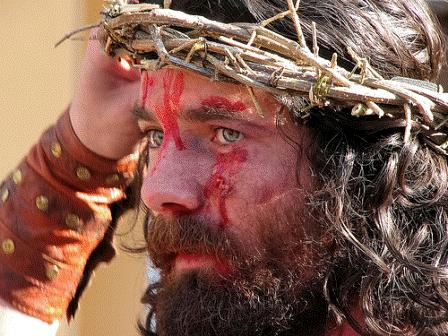
Christian Healing Bible study Jesus crown of thornsChristian healing is something very close to my heart.

I was not raised Christian. But, by the time the Lord finally got hold of me, I had lots of places that I needed Him to heal.

Like me, you may need a healing touch from God in your spirit, your emotions, or even in your body. Whatever touch you need, it is exactly what Jesus went to the cross for.

Faith Healing vs. Miracles

Before we begin here, we need to make an important distinction. A biblical healing and a miracle are not the same thing.
I am not sure if you can relate. But, I personally have shed many tears because I didn't understand the difference.
After being ill for a few years, I was eventually diagnosed with Chronic Fatigue and Fibromyalgia.
I would go up for prayer at various healing services, and wondered why others were being healed instantly, while I was not. Did I not have enough faith? Was healing just not for me?
I went through similar turmoil as I sought Jesus' for healing over childhood abuse and other pains in my heart. Did He just not care about me?
What God taught me through His Word, time alone with Him, watching my own healing manifest, and watching others be restored, is that a miracle is instantaneous. A healing is gradual.
Whether physical, emotional, or spiritual, your healing usually comes in layers. It is as if God carefully removes each layer of pain as He works inside of you until you are fully restored.

If you are seeking God for an emotional or spiritual transformation, God specialized in restoring our broken places. As you discover how to take yourself before Him, shattered pieces and all, He will put you back together again.


Bible Study Online Logo


Friday, 23 March 2012

God-Talk About Healing

Healing is a divine mystery. God does not provide the same things to everyone, nor the same thing all the time to any one person. The gifts are measured according to the Kingdom's standards, not our standards, and are given entirely for God's purposes. It's not a 'health and wealth' thing where one presses a prayer button marked 'gimme' and out pops a new Mercedes or a faith healing. The idea of automatic blessing is presumption and control, not faith. Yet, charismatic Christians take issue with the church in general for not seriously believing that God will lead, heal, or empower. They believe that God can and DOES step into our lives. They trust that God will do right by them when they are ill (Matthew 6:19-33).

However, there's a serious problem among some churches. It's especially severe among fundamentalists and fringe Pentecostals, but the problem can be found in members of just about any church. The problem starts with a simple idea: that unconfessed sin can cause illness. The Bible teaches that (Psalm 107:17; Micah 6:13). Life experience teaches that. I myself have gone through serious physical distress because of what an unconfessed sin did to me from inside, twisting me into such knots that I developed itchings and sores and headaches and bodily weakness. I knew it, too. I confessed it, then started doing something about it, and indeed, it went away.

The problem is that many Christian churches teach this in reverse: if you're ill and it doesn't go away with prayer, then it must be caused by unconfessed sin or the absence of faith. Baloney! It usually isn't caused by unconfessed sin. Illness is made possible by the sinfulness which comes with being a part of this created world -- the sort of sin which Christians mean when saying that all human beings are 'fallen'. This 'fallenness' (having to do with 'original sin') has put us all out of kilter and made us un-whole. Our state of sin is what makes it possible for us to become ill, and guarantees that we will die. But all the confession in the world has never once gotten rid of that state of sin. It's with us till the Kingdom comes. Specific sins are usually not what gives a specific person their specific illness at a particular time. You may make the causal connection that sin A led to illness B, but the logic does not hold in reverse - illness B can also be caused by germ C, or gene D, or accident E, or someone else's sin F, or other things G through Z.

Yet I can tell you of dozens of people I have met (and hundreds I have heard about) who were scolded, berated, shunned, shamed, and labeled as a grave sinner just because they happened to be ill and it didn't go away when they were prayed over. I've seen this happen with my own eyes more times than I care to recount. Most Pentecostalists I know of are aware of this, and say that they don't believe that the failure to be healed is always from unrepented sin. Yet, even for those people, old habits die hard. Often, the first thing that even those believers will do when someone isn't healed is to start interrogating the unhealed person about the parts of their life that personal sins are most expected to be found - usually involving sex. Tens of thousands of people every year are driven away from the church by this belief. They flee because instead of being loving people who gave grace to someone in need, the church was an angry, superstitious, bitter, legalistic, elite clique which showed no love at all, and indeed showed exactly the opposite of such love. This is not the way of Christ: Christ made contact with the ill, Christ treated them personally, Christ healed them, Christ showed them love. If your church doesn't do that, either change churches, or if possible, cause the church to change. It is a matter of the Gospel.


http://www.spirithome.com/healings.html


Monday, 19 March 2012

Anointing the Sick

The New Testament's Book of James gives some very unusual instructions on how to treat illness:
"Is any sick among you? let him call for the elders of the church; and let them pray over him, anointing him with oil in the name of the Lord: And the prayer of faith shall save the sick, and the Lord shall raise him up; and if he have committed sins, they shall be forgiven him."
—James 5:14-15
In eras when human knowledge was far less advanced, it's not surprising that people would turn to superstitious practices such as prayer and anointing with oil in an attempt to cure illness. What's far more surprising is how many people still believe in these practices today, despite our far more advanced knowledge of scientific medicine, as well as ample evidence that faith healing does not work.
The Greek Orthodox Church, for example, makes anointing a regular practice, and claims that it offers physical healing:
At the conclusion of the service of the Sacrament, the body is anointed with oil, and the grace of God, which heals infirmities of soul and body, is called down upon each person.
...The Sacrament of the Unction of the sick is the Church's specific prayer for healing. If the faith of the believers is strong enough, and if it is the will of God, there is every reason to believe that the Lord can heal those who are diseased.
The Assemblies of God says the same thing:
In the Assemblies of God we believe neither the laying on of hands nor anointing with oil is indispensable for healing, for often in Scripture healing takes place without either. But at times the touch of a praying person and the application of oil are an encouragement to faith, and such a practice is enjoined by Scripture (James 5:14-16).
And, as Jeffrey Shallit reports, Prof. Clifford Blake of the University of Waterloo is an unabashed believer in faith healing through anointing and other, equally mystical methods:
Some people believe healing was only in the time of the Bible. But he knows it is happening now. When he began to use healing oil, he got more consistent results.
Granted, there are also Christians who believe the anointing is merely symbolic. And the reason they believe that should be obvious: because it is abundantly obvious, to those who know how to think critically, that anointing people with oil is not an effective method of curing illness. If there was any evidence that this was an efficacious treatment, we can be sure it would be universally employed in every Christian church, and would not be explained away as symbolic. But as scientific medicine has progressed and our ability to work real cures has increased, superstitious practices like this have become increasingly superfluous and have gradually faded away (although, as shown, there are still plenty of holdouts).
Certainly, the Bible's description of this does not seem like mere symbolism: it says clearly that "the prayer of faith" will save the sick, and in conjunction with the oil, "the Lord shall raise him up" (the Greek word, egeiro, means "to cause to rise", i.e., from a seat or a bed). My question to modern believers who view this passage symbolically is, if you know this doesn't work, how do you know that - and do you apply that same standard to the rest of the Bible? And to those who still use faith healing and dabs of magical oil, in an age of genetic manipulation, transplant surgery and antibiotics, my question is: Do you really believe that?

http://www.daylightatheism.org/2008/03/do-you-really-believe-that-v.html
